Replacing or repairing a roof is one of those jobs that hides complexity beneath a simple exterior. A brief walk around the house and a few measurements will not capture water intrusion paths, ventilation issues, or the condition of underlayment. I have stood on wet attics at midnight with homeowners fretting over damaged insulation and seen contractors offer confident, lowball estimates that omitted critical steps. Asking the right questions up front separates competent roofing companies from the ones that will leave you with surprises, delays, and extra bills.
Why the questions matter Roofing is expensive, disruptive, and potentially risky. The price of a new roof can vary wildly, typically from about $5,000 for a small asphalt re-roof to $30,000 or more for larger houses or premium materials. Those ranges depend on roof area, pitch, tear-off complexity, local labor rates, and the materials chosen. A clear quote is not only about the bottom line, it reveals whether the contractor understands the job, will handle permits and inspections, carries the right insurance, and will stand behind their work months and years after the last shingle is nailed down.
How contractors estimate, and where they differ Most roofing companies use one of two approaches. Some provide a per-square price, where one square equals 100 square feet, and then add allowances for tear-off, disposal, flashing, and underlayment. Others build a line-item estimate that lists materials, labor hours, and specific tasks. Both approaches can be fair, but the line-item format is easier to compare between bids. Watch for quotes that give only a final number without detail. That number may conceal exclusions that show up later as change orders.
Essential questions to ask before a quote Ask these five questions during the first phone call or site visit. They force the contractor to explain qualifications, scope, and expectations in plain language.
Are you licensed, bonded, and insured, and can you provide proof? This checks basic responsibility. Licensing requirements vary by state, but a company should gladly present a license number you can verify. Insurance matters more. A reputable company carries both general liability insurance and workers compensation. If a worker falls off your roof and the contractor lacks workers compensation, you could be on the hook. Ask for current certificates and verify the insurer and policy limits with a phone call to the agency. Bonding and consumer protections vary, but a performance bond or surety bond shows extra financial commitment.
Will you obtain permits and handle inspections? Most municipalities require permits for roof replacements and sometimes for major repairs. A reputable company will pull permits, schedule inspections, and base the quote on that work. If a contractor expects you to do permits yourself, consider that a red flag. Permit fees are predictable, and a professional should include them as a line item or note them separately.
How do you handle hidden damage, and what is the change order process? When decking, underlayment, or flashing is rotten or improperly installed, the contractor must repair it. Ask how they will identify hidden damage before work starts, what contingencies they include, and how they will present additional costs for approval. A fair policy is to not proceed with extra work until you sign a written change order. Insist on written descriptions, prices, and time impacts for any unforeseen repairs.
What warranties do you offer on materials and labor? Most manufacturers offer product warranties that cover defects in shingles or metal panels, often 20 to 50 years for higher-end materials. Those warranties do not cover installation errors. Ask the company for a workmanship warranty in writing and for specifics: length, what it covers, whether there is a prorated or full replacement, and whether the warranty transfers if you sell the house. Beware of vague promises; require a written warranty on company letterhead.
Who will be on site, and what is your cleanup plan? Know if a subcontractor will perform the work, who will supervise, and whether you will have a single point of contact. Roofing crews vary in skill. Ask about crew size, expected work hours, and debris removal. Magnetic sweepers are standard for shingle jobs to collect nails. If the contractor intends to leave nails in gutters, shrubs, or on the lawn, that signals poor attention to detail. Confirm whether they will dispose of materials at a landfill, recycling center, or other facility.
Digging deeper: technical questions that reveal experience Beyond basics, these questions determine whether the roof will perform for years or develop recurring problems.
What decking and underlayment do you recommend, and why? A contractor should explain when to replace sheathing and whether synthetic underlayment, ice and water shield, or felt is best for your roof geometry and local climate. In cold climates with ice dams, ice and water shield along eaves and valleys reduces leaks. On steep, shaded roofs prone to algae, a copper or zinc strip near the ridge can slow growth. If the company offers only the cheapest underlayment without explaining trade-offs, push back.
How will you address ventilation and attic airflow? Poor ventilation shortens shingle life and creates moisture problems. The contractor should assess current soffit intakes, ridge vents, and any boxed-in eaves. Ask them to calculate net free ventilation area relative to attic square footage or to describe how they balance intake with exhaust. If they recommend adding roof-mounted vents without checking soffit vents or baffles, you may see poor airflow and heat buildup.
Do you plan to replace flashings and step flash behind chimneys and walls? Flashing and step flashings are frequent leak sources. A competent roofer replaces old metal flashing around chimneys, dormers, and vents, and will use proper step flashing technique where the roof meets vertical surfaces. If a contractor says they will reuse the old flashing without examination, expect future leaks.
What manufacturer and product do you plan to use, and why? Ask for brand and model numbers. Familiar manufacturers publish installation requirements that affect warranty eligibility. If a roofer suggests a specific shingle but cannot provide the product data sheet, ask why. Also request a sample or the exact shingle color and exposure so you know what arrives on the truck.
How will valley and ridge details be handled? There are different valley systems, open metal valleys, woven valleys, and closed-cut valleys. Each has pros and cons depending on roof slope and exposure. Ridge caps matter for aesthetics and ventilation. A contractor should describe the choice and rationale.
Money and schedule: practical, enforceable terms Budget and timing need clarity to avoid tension mid-project.
What is the payment schedule? Common schedules are 10 to 30 percent deposit, a progress payment at mid-job, and final payment at completion. Beware of contractors asking for most of the price up front. For larger jobs, tied payments to milestones after inspection checkpoints are reasonable. Always hold final payment until you have a signed final inspection report and proof of final cleanup. Request lien waivers for payments, which confirm subcontractors and suppliers have been paid and protect you from future claims.
What is the estimated start date and job duration? Contractors will be honest: schedules shift with weather, supply availability, and subcontractor calendars. Still, a reliable company can give a window, projected duration in days, and contingency for rain. For example, "start within three weeks, expect three to five days of work barring bad weather." If a company cannot commit to any timeline, be cautious.
Are there allowances or exclusions in this quote? Allowances for gutters, soffit, fascia, or chimney work should be explicit. Exclusions might include tree trimming, rot repair, HVAC flue relocation, or window protection. If the quote lists no exclusions, ask what is not included so you can compare bids apples to apples.
Verifying credibility: research steps to perform A few minutes of research can prevent headaches.
Check online reviews and building department records Read recent reviews with specifics about communication, timeliness, and post-job cleanup. residential roofing companies Take both five-star and one-star reviews with context, but recurring themes matter. Contact your local building department to confirm the contractor has pulled permits before and to see if complaints or stop-work orders exist. A long track record of permits and inspections is a good sign.
Ask for references from recent similar jobs Get contact details for two or three homeowners whose roofs were completed in the past six months to a year, ideally with similar material and complexity. Drive by those houses if possible, inspect the shingles, flashing, and gutters, and ask about any post-job problems. Contractors with confidence will happily provide references.
Insurance and bonding, explained with numbers Request certificate of insurance that names your property as an additional insured for the duration of the work. Policy limits should commonly be at least $1 million for general liability. For large projects, higher limits are not unusual. Verify workers compensation coverage so you do not face medical claims if someone is injured on your property. If a contractor cannot provide these documents, do not proceed.
Common red flags and how to react Below is a short checklist of warning signs to watch for when evaluating estimates and conversations.
- demands for large cash-only upfront payments no written contract or only a verbal agreement inability to provide certificates of insurance or a license number an unusually low bid with vague scope or missing line items pressure to sign immediately or claims of an expiring discount
If you encounter one or more of these behaviors, pause and get another bid. A slightly higher price from a trustworthy company is often better than the risk of poor installation and future repairs.
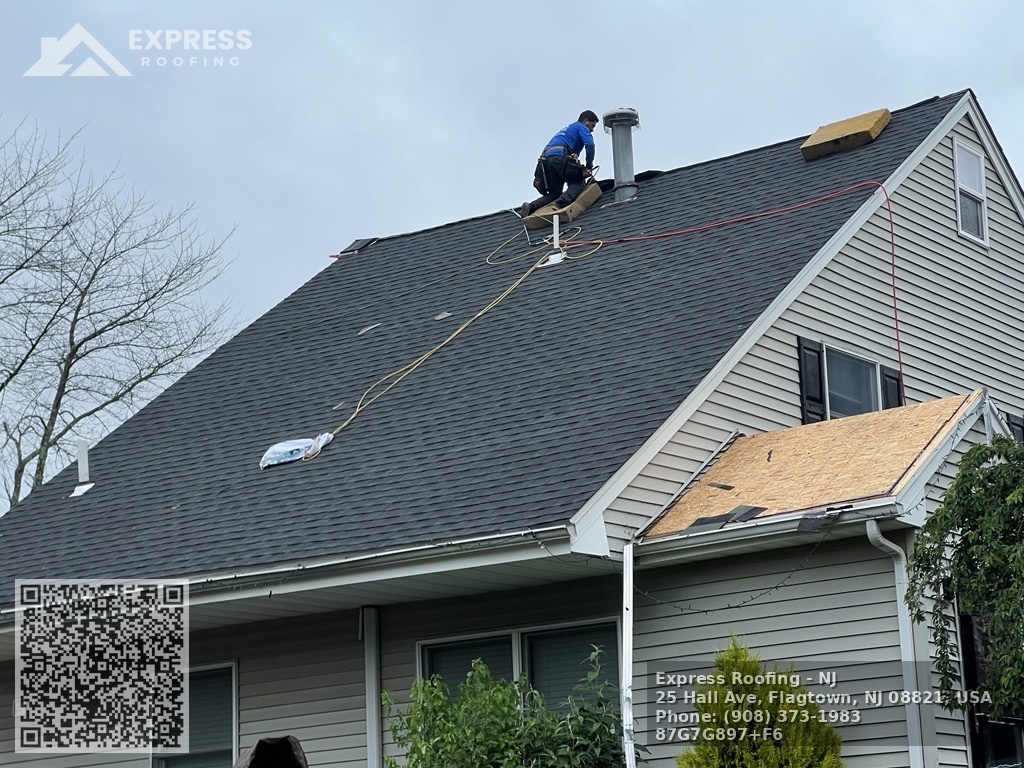
What to expect on the day of work A professional crew will arrive with a tarp plan to protect plants, walkways, and HVAC units, and with dumpster or tarping to manage debris. They should position ladders safely, post a visible company sign or permit if required, and place magnetic nail sweepers in action at the end of each day. Expect noise and foot traffic, and plan for temporary roof penetrations around vents and chimneys to be sealed before bad weather.
Post-installation: documentation and follow-up After the roof is done, the contractor should provide several items in writing: a final invoice, copies of permit sign-offs and inspection reports, manufacturer warranty documents, and the company workmanship warranty. Request a final walk-through so you can point out concerns while the crew is still on site. Keep all paperwork in a folder for future reference, especially if you sell the home.
Trade-offs and choices: material, cost, and lifespan Choosing roofing material involves trade-offs between initial cost, longevity, and maintenance.
Asphalt shingles are the most common option, and for a typical home they cost less upfront. Expect 20 to 30 year manufacturer warranties for mid-grade asphalt. Architectural or laminated shingles are thicker and often carry 30 to 50 year warranties. Metal roofing costs more initially, often 1.5 to 3 times asphalt, but lasts 40 to 70 years and sheds snow more effectively. Wood shakes have an attractive look, but they require maintenance and may not be allowed in fire-prone areas. Tile and slate last decades but add significant weight. If you have an older home Roof replacement with rafters sized for a lighter roof, structural reinforcement may be required and can double or triple costs for the roof system.
Anecdote on surprises worth remembering On one job I supervised, the estimate assumed a single-layer tear-off. Halfway through demolition we found the original roof sheathing was plywood from a 1940s addition, rotted around valleys. The contractor had documented the possibility in the estimate, with a contingency for decking replacement. We approved the change order, paid the additional $1,200 to replace the damaged sheathing, and avoided a leak after the first heavy rain that season. Without that contingency clause and a clear change order process, the job could have stalled and become contentious.
Negotiation tips without sacrificing quality You can negotiate, but focus on scope and clarity rather than just price. Ask if the contractor offers a discount for off-season scheduling, or if they can phase work to fit your budget without cutting critical steps like underlayment or flashing replacement. If multiple bids are close, use competing estimates to ask for minor concessions: upgraded ridge caps, a longer workmanship warranty, or including gutter guards. Beware of contractors trimming safety or material specifications to lower the price.
Final thoughts on decision criteria Select a roofing company based on a combination of documented experience, clear written scope, proof of insurance and licensing, sensible payment terms, and demonstrated understanding of local climate and code requirements. The lowest price rarely includes the best value. Look for contractors who explain trade-offs, answer detailed questions about ventilation and flashing, and provide written warranties and permit documentation. That combination reduces the chance you will call a roof repairman in two years instead of enjoying a durable roof that protects your home.
If you keep these questions handy on your first call or site visit, you will surface the essential differences between bids and make a confident choice. A new roof is a major investment, but with the right contractor and a clear contract you can protect that investment for decades.
Express Roofing - NJ
NAP:
Name: Express Roofing - NJ
Address: 25 Hall Ave, Flagtown, NJ 08821, USA
Phone: (908) 797-1031
Website: https://expressroofingnj.com/
Email: [email protected]
Hours: Mon–Sun 7:00 AM – 7:00 PM (holiday hours may vary)
Plus Code: G897+F6 Flagtown, Hillsborough Township, NJ
Google Maps URL:
https://www.google.com/maps/place/Express+Roofing+-+NJ/@40.5186766,-74.6895065,17z/data=!3m1!4b1!4m6!3m5!1s0x2434fb13b55bc4e7:0xcfbe51be849259ae!8m2!3d40.5186766!4d-74.6869316!16s%2Fg%2F11whw2jkdh?entry=tts
Coordinates: 40.5186766, -74.6869316
Google Map Embed
Social Profiles
Facebook: https://www.facebook.com/expressroofingnj
YouTube: https://www.youtube.com/@ExpressRoofing_NJ
X (Twitter): https://x.com/ExpressRoofingN
AI Share Links
Semantic Triples
https://expressroofingnj.com/
Express Roofing - NJ is a customer-focused roofing company serving Somerset County, NJ.
Express Roofing - NJ provides roof repair for residential properties across Somerset County.
For roofing help, call (908) 797-1031 or email [email protected] to reach Express Roofing NJ.
Connect on Facebook: https://www.facebook.com/expressroofingnj and watch project videos on YouTube: https://www.youtube.com/@ExpressRoofing_NJ.
Follow updates on X: https://x.com/ExpressRoofingN.
Find the business on Google Maps: View on Google Maps.
People Also Ask
What roofing services does Express Roofing - NJ offer?
Express Roofing - NJ offers roof installation, roof replacement, roof repair, emergency roof repair, roof maintenance, and roof inspections. Learn more: https://expressroofingnj.com/.
Do you provide emergency roof repair in Flagtown, NJ?
Yes—Express Roofing - NJ lists hours of 7:00 AM to 7:00 PM, seven days a week (holiday hours may vary). Call (908) 797-1031 to request help.
Where is Express Roofing - NJ located?
The address listed is 25 Hall Ave, Flagtown, NJ 08821, USA. Directions: View on Google Maps.
What are your business hours?
Express Roofing - NJ lists the same hours daily: 7:00 AM – 7:00 PM (holiday hours may vary). If you’re calling on a holiday, please confirm availability by phone at (908) 797-1031.
How do I contact Express Roofing - NJ for a quote?
Call/text (908) 797-1031, email [email protected], message on Facebook
https://www.facebook.com/expressroofingnj,
follow on X https://x.com/ExpressRoofingN,
or check videos on YouTube https://www.youtube.com/@ExpressRoofing_NJ
Website: https://expressroofingnj.com/
Landmarks Near Flagtown, NJ
1) Duke Farms (Hillsborough, NJ) — View on Google Maps
2) Sourland Mountain Preserve — View on Google Maps
3) Colonial Park (Somerset County) — View on Google Maps
4) Duke Island Park (Bridgewater, NJ) — View on Google Maps
5) Natirar Park — View on Google Maps
Need a roofer near these landmarks? Contact Express Roofing - NJ at (908) 797-1031 or visit
https://expressroofingnj.com/.